
Despite the immeasurable performance capacity of computers and machines, the curiosity of humans continue to exploit their power, “Can a machine think and behave like humans do?”
To pursue intelligence in machines as high as humans, began the development of AI.
According to the father of Artificial Intelligence, John McCarthy, it is “The science and engineering of making intelligent machines, especially intelligent computer programs”.
Beginning with morning alarms from Siri or Alexa, to further fundamental technologies such as behavioral algorithms, autonomously-powered self-driving vehicles etc., there are several applications of artificial intelligence in use today- which are seeping their way into our lives.
One doesn’t realise the uses of AI in the stretch of the day, because they seem to have become a very obvious part of our lives- be it an online game of chess, conversing through natural language processing and speech recognition, getting answers through expert systems, biometrics and iris security as part of computer vision or robots, for that matter.
AI carries a promise of transformative power, especially the healthcare industry- where it may help solve the dilemma of “iron triangle” comprising of three factors—access, affordability, and effectiveness, wherein improvement of one factor usually comprises trading-off of the other.
Commencing from the most basic stage, detection, to the ongoing cycle of life care- AI’s applications prove to be changing the landscape of healthcare- fundamentally.

· Regular wellness – A number of apps not only encourage healthy behavior, but provides data to healthcare professionals about day-to-day needs, habits and pattern of the patient. This provides better lifestyle to the patient, probably reducing the number of doctor visits.
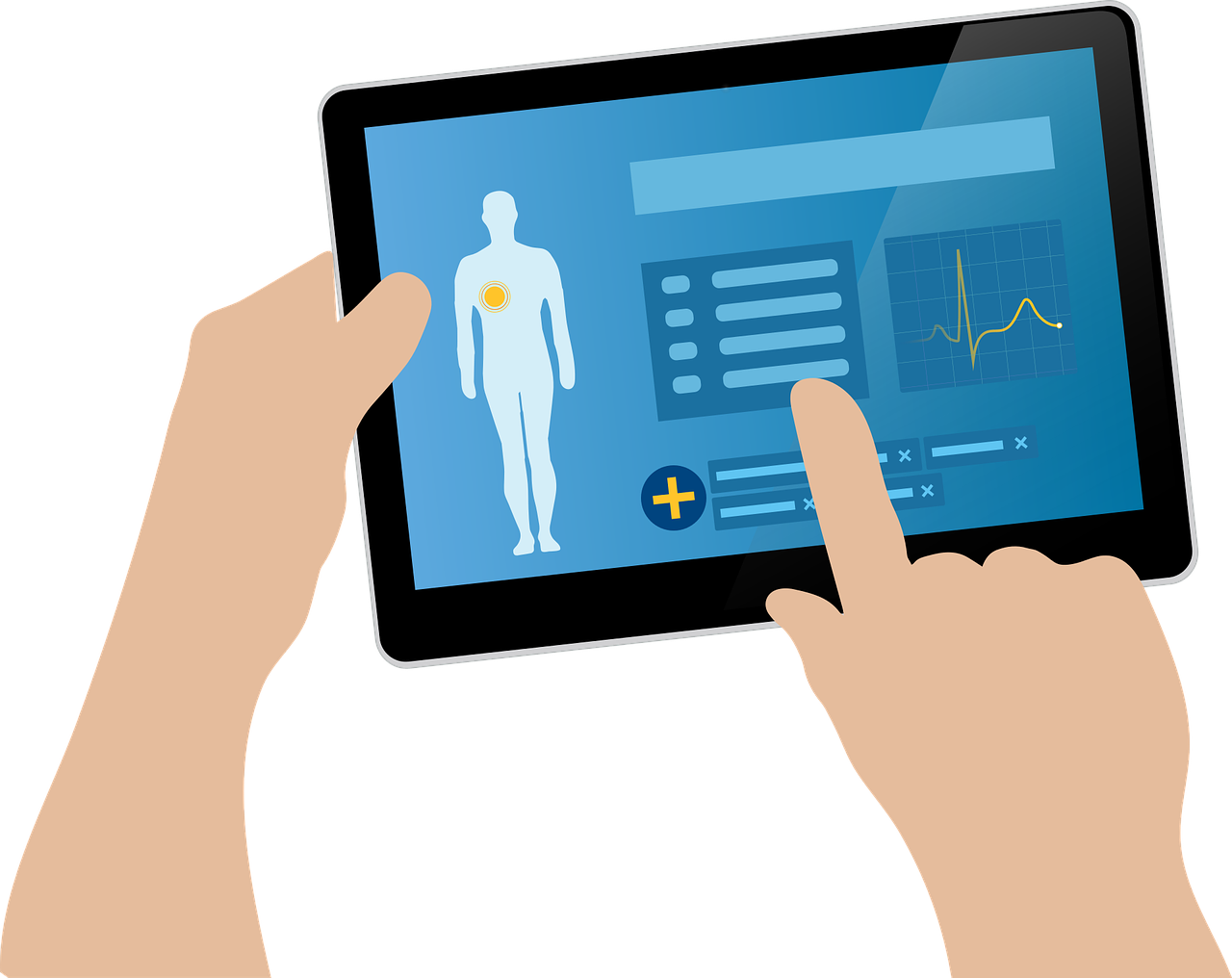
· Data Management – These apps couple with managing medical data like records and past history, to provide faster access and easier understanding.
· Early Detection – AI helps to detect diseases far more accurately and faster than human capabilities, especially in their early stages- like via body scans for genetic diseases, or through other tests in fields like radiology and cardiology which are in dire need of early detection for better diagnosis.
· Diagnosis- On one hand, various AI apps can provide medical consultation based on personal medical history and common medical knowledge using various features like speech recognition, data analysis. On the other hand, AI makes diagnosis easy for doctors by retrieving health data and diagnosis measures through cognitive technology.
· Decision Making – Artificial intelligence systems analyse data from patient history and expertise, use pattern recognition to identify risks, and personal diagnostic pattern- thus providing easier clinical decision-making.
· Treatment – AI provides numerous benefits in this aspect- identification of high-need patients through analysis, better plans for disease management and long-term treatment, assistance in surgery, followed by support in repetitive tasks of rehabilitation, physical therapy, monitoring patient’s medicines etc.
· Life Care – AI has coupled with the advancements in humanoid design to monitor conditions, follow up with treatments, helping to reduce hospitalisation needs, alongside even enabling robots to have ‘conversations’ and other social interactions with people to keep aging minds sharp.
· Research – Keeping in mind the long and costly process of drug development and research methodology for the same, AI provides potential to streamline the processes of discovery and production to make it more efficient.
· Training – The improvement in human-learning capabilities can prove to be one of the most helpful applications of the human-made AI. The training program can be customized according to the vast database, and responses of the trainee- which can be available 24*7.
It can thus be understood that AI can revolutionise every stage of healthcare with its focus on digitization, engagement and diagnostics.
However, the other side of the coin also poses a number of challenges to widespread adoption and implementation of the AI tools. It includes lack of standards in current regulations, absence of trust on part of both-the patient and the healthcare providers, efficient data exchange program, the investment fund requirement as well as the high scalability.
However, the current helping hand of artificial technology, as and how used judiciously, is the future of medicine and patient care.
A.I., in these fields and more, can improve on past iterations, getting smarter and more aware, allowing it to enhance its capabilities and its knowledge.
 Medical and Healthcare Tech.